
Wealth with Intention
Money Wisdom for Your Next Chapter
Are You Getting Your Full 401(k) Match? How to Check in 15 Minutes

The short version: your employer match is the highest-return money in your financial life, and three fairly ordinary mistakes cause people to miss part of it. You can check all three yourself in about fifteen minutes using your Summary Plan Description and your most recent pay stub.
Most people assume that if they are contributing to their 401(k), the match takes care of itself. Usually it does. But "usually" is doing a lot of work in that sentence, and the exceptions are expensive.
What is a 401(k) employer match?
An employer match is money your company adds to your 401(k) based on what you contribute. It is compensation you have already earned. You just have to meet the plan's conditions to receive it.
Two formulas cover most plans:
- 100% of the first 3%, then 50% of the next 2%. You contribute 5% of pay, your employer adds 4%.
- 50% of the first 6%. You contribute 6% of pay, your employer adds 3%.
Your exact formula lives in your Summary Plan Description, the document your p...
Understanding Your 401(k) Rollover Options: A Confident Woman's Guide to Rolling Over Your Retirement Savings

If you've just left a job, or you're about to, there's a good chance an email from HR is sitting in your inbox with a subject line like "Important information about your retirement account." It probably came with a stack of forms and very little explanation.
I get it. This is one of those money decisions that feels small and administrative until you realize a wrong move can trigger taxes, penalties, or years of quietly higher fees. The good news is that a rollover is very doable once you know how the pieces work. I've spent more than a decade as a financial advisor helping women through exactly this, and I want to walk you through it the way I would if you were sitting across the table from me.
The Short Version
When you leave an employer, you can generally roll your old 401(k) into an IRA, move it into your new employer's plan, leave it where it is, or cash it out. Cashing out is almost always the most expensive choice. For the other three, ask for a direct rollover, which means th...
Should I Max Out My 401(k)?

Every year, the same question lands in my inbox from smart, accomplished women who are trying to do right by their financial futures: "Leah, should I just max out my 401(k)?"
It sounds like such a simple yes-or-no question. And the internet will happily give you a confident, one-size-fits-all answer. But here is the truth: it depends, and the details of that dependency matter enormously.
In 2026, the IRS lets you contribute up to $24,500 to a 401(k) if you are under 50. If you are 50 or older, you can add an $8,000 catch-up contribution, for a total of $32,500. Some plans also allow a higher catch-up of $11,250 for ages 60 through 63. Maxing that out sounds virtuous. Responsible. Like the financial equivalent of eating your vegetables. But blindly maxing your 401(k) without considering your full financial picture can actually work against you.
First: What Is the Case FOR Maxing It Out?
Let us give credit where it is due. There are genuinely compelling reasons to contribute as much as p...
Self-Directed 401(k) or 403(b): 3 Benefits and What to Watch For

By Leah Hadley, AFC®, CDFA®. Last updated September 2026.
Many people are surprised to learn that their 401(k) or 403(b) may include a second way to invest. Alongside the standard menu of funds your employer picked, some plans offer what is called a self-directed brokerage window. It is easy to miss, and most participants never open it.
Whether it is worth using depends on what you want it to do for you. This post explains what it is, three ways it can help, and the costs and risks to weigh before you decide.
The short answer. A self-directed 401(k) or 403(b) is a workplace plan that includes a brokerage window, which lets you choose investments beyond your plan’s standard fund menu. Not every employer offers one, and plans can limit what you buy. The main benefits are broader choice, room for professional guidance, and more precise control over risk. The main drawbacks are extra fees, more ways to make costly mistakes, and less oversight from your employer on what you pick. For ma
...Roth IRA vs. 401(k) in 2026: Differences, Limits, and How to Choose
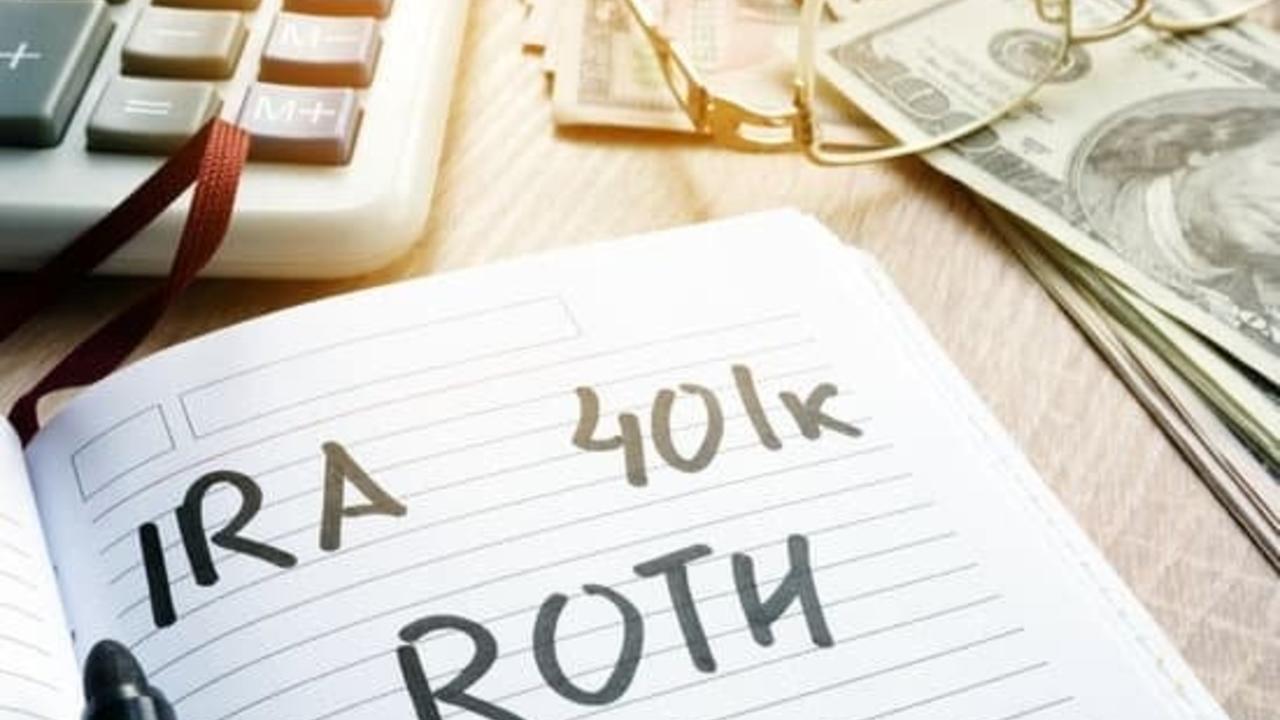
By Leah Hadley, AFC®, CDFA®. Last updated September 2026 with the current IRS limits.
Whether you're starting a new job that offers retirement savings options, or you're looking into managing your investments yourself, it's easy to get overwhelmed. If investment lingo feels too far beyond your wheelhouse, learning the difference between a Roth IRA and a 401(k) is a good place to start. Let's work through what each account is, how to use it, and the pros and cons of each. Spoiler alert. Some people are eligible to use both.
The short version. A 401(k) is an employer plan with a much higher 2026 limit ($24,500) and often an employer match. A Roth IRA is an account you open yourself, with a lower limit ($7,500) but more investment choices and tax-free withdrawals in retirement. If you can, use both. Start by capturing your full employer match, then compare what else fits your goals.
Roth IRA vs. 401(k) at a Glance
| 401(k) | Roth IRA | |
|---|---|---|
| How you get one | Through an employer that off | ...
Categories
All Categories
Leah Hadley, AFC®, CDFA®, MAFF®
Founder/Senior Wealth Manager
Leah Hadley is the founder of Intentional Wealth Partners and Intentional Divorce Solutions, sister companies based in Cleveland and serving clients nationwide. Intentional Wealth Partners provides financial planning and wealth management. She specializes in helping women and couples navigate major life transitions with confidence and clarity. She is also the author of Intentional Money: The Modern Woman's Guide to Building Wealth, Purpose, and Peace, host of the "Intentional Divorce Insights" podcast, and a sought-after speaker.
Our Offices
Cleveland, OH 44130
(440) 545-1001
Monday through Thursday, 9:00am to 5:30pm
Friday, 9:00am to 4:00pm
The Woodlands, TX 77380
(346) 740-7930
Monday through Friday, 9:00am to 5:00pm
