
Back to the Investment Basics Part 5: Patience and Personal Persistence

By Leah Hadley, AFC®, CDFA®. Last updated September 2026.
So far in this series, we have looked at how recency bias pulls investors off course, why saving comes first, how to invest broadly in markets that are both robust and random, and why the price you pay matters.
Applied together, those give you a sturdy way to capture the returns markets have to offer. The last two basics are different. They are not about markets at all. They are about how you behave once the portfolio is built, and whether it fits your life.
The short answer. Patience means staying invested through downturns so you are still there for the recoveries. Personal means matching how much you invest to your own goals and timelines, not to the news or your neighbor. In practice, that comes down to three steps. Set aside cash or stable investments for spending you expect in the next few years, invest the rest for the long term, and automate as much as you can so fewer decisions are left for the moments when you feel least steady. In 2025, the S&P 500 turned positive for the year by mid-May and hit a new all-time high by late June, only weeks after one of the sharpest drops in its history. Patient investors were rewarded for doing nothing dramatic.
What a 96-Year-Old Investor Can Teach Us
The trouble with watching the market closely is that noise starts to look like signal. Short bursts of activity produce patterns that are not really there, and they can leave you too gloomy or too bold, which leads to impatient choices that do nothing for your actual goals.
A longer lens helps. Over years, results look far more orderly than they ever feel in the moment. We still cannot predict the path, but the range of outcomes has tended to rise over time for investors who stay in the market and participate in its growth.
Warren Buffett, who is now 96 and stepped down as Berkshire Hathaway’s CEO at the end of 2025 after six decades leading the company, described this long ago. In his 1991 shareholder letter, he wrote that the stock market serves as “a relocation center at which money is moved from the active to the patient.” His approach has not changed since. Ownership of productive businesses builds wealth, and the main things it asks of you are time, calm, diversification, and few transactions.
It is hard to argue with the record of someone who has invested for more than seven decades. If you have ever felt tempted to step aside during a scare, our post on the courage to hold through a downturn goes deeper on what that looks like in practice.
Not All of Your Money Belongs in the Market
Patience works best when you never have to sell at the wrong time, and that takes some planning.
First, a long downturn can test anyone’s patience. Holding some more stable investments alongside stocks makes it easier to keep your nerve.
Second, you need cash or cash-like holdings for spending you expect soon. The point is never to be forced to sell stocks after a decline just to pay a bill.
Third, holding too much cash has its own cost. With inflation running 3.4 percent as of August 2026, cash that sits idle tends to lose purchasing power over time.
The trick is to balance investing for the long term against holding enough for what is coming. A simple way to think about it is to sort your money by when you will need it.
- Needed in the next one to three years. Cash and high-quality, short-term holdings. This money should not depend on what the market does this year.
- Needed in three to ten years. A more balanced mix of stable investments and stocks, depending on how much fluctuation you can tolerate.
- Needed in ten or more years. Mostly stocks, diversified widely, where time gives you room to ride out declines.
If you plan to buy a home in two years, that down payment should not ride on the stock market. If you are saving for a retirement twenty years away, it can.
Investing Is Personal
How much you invest and how much you hold back depends on your own goals, not on a formula.
The market will do what it does. What you control is how you respond, and that response should reflect your own goals rather than a neighbor’s portfolio, the latest headline, or whatever happened last week.
Before you decide, it helps to answer three questions.
- What is this money for? A retirement in twenty years and a down payment in two are different goals, and they call for different investments.
- When will I need it? Timing is the single biggest factor in how much risk makes sense.
- How would I really act if it dropped by 30 percent? Be honest here. A portfolio you would abandon in a downturn is too aggressive for you, no matter what the spreadsheet says.
Automate What You Can
Once you have a plan, take as many decisions out of your hands as you can. Automatic contributions, automatic rebalancing where it is offered, and diversified funds that handle allocation all reduce the number of times you have to choose, and every avoided choice is one less chance to second-guess yourself in a bad week.
Set aside what you need for spending in the near term. Put the rest in broadly diversified, low-cost investments. Then let the market do its long-term work.
Taken together, the five basics come down to a simple routine. Save first, own the market broadly, keep costs low, hold what you need in reserve, and stay with the plan.
Frequently Asked Questions
How long should I stay invested?
As long as the money is meant for a goal that is many years away. For a long-term goal like retirement, that often means decades, with adjustments as the timeline shortens. Money you will need within a few years generally belongs in more stable holdings rather than in the stock market.
How much cash should I keep outside the market?
Many people aim for three to six months of essential expenses as an emergency fund, plus any spending they know is coming in the next one to three years, like tuition, a home purchase, or a large repair. Your number depends on your income stability, your family, and your goals.
What should I do if the market drops right after I invest?
If the money is for a goal many years away, the usual answer is to stay with the plan. If the drop worries you enough to consider selling, that is a sign to revisit whether the allocation matches your comfort with risk, not a signal to react in the moment.
How do I make investing more automatic?
Set up recurring contributions from your paycheck or bank account, use a workplace plan’s automatic increase feature if it has one, and consider diversified funds that rebalance for you. The aim is to make the good decision once, and to leave as few decisions as possible for when markets feel scary.
Is patience the same as doing nothing?
No. Patience means holding to a plan. It still leaves room for reviewing your plan, rebalancing, and adjusting when your goals or circumstances change. What it rules out is changing course because of a headline.
Let’s Build a Plan That Fits You
We would love to continue the conversation. A plan that reflects your goals, your timeline, and your comfort with risk is the best foundation for staying patient when markets get rough.
Intentional Wealth Partners provides comprehensive financial planning and wealth management, including investment management, risk analysis, debt management, tax planning, career planning, and retirement planning. We are based in Cleveland, Ohio, and work with clients virtually nationwide.
Learn more about how we work, or schedule a complimentary consultation to see if we’re a good fit.
Related reading. If you have already built significant assets and want to go deeper, start with The Three Principles of Sound Investing, and revisit Part 1 of this series any time the headlines start to feel louder than your plan.
This article is general education and is not investment advice. Past performance does not guarantee future results, and diversification does not ensure a profit or protect against loss in a declining market. The time-horizon framework above is an illustration, not a recommendation for any individual. Buffett quotation is from Berkshire Hathaway’s 1991 shareholder letter. S&P 500 2025 milestones per public market records. Inflation data is from the U.S. Bureau of Labor Statistics CPI release for August 2026. Every situation is different, so talk with a qualified professional before making decisions about your finances.
Categories
All Categories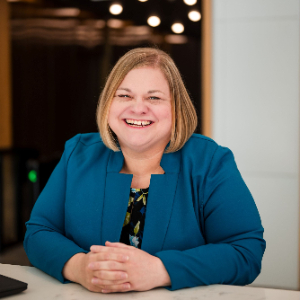
Leah Hadley, AFC®, CDFA®, MAFF®
Founder/Senior Wealth Manager
Leah Hadley is the founder of Intentional Wealth Partners and Intentional Divorce Solutions, sister companies based in Cleveland and serving clients nationwide. Intentional Wealth Partners provides financial planning and wealth management. She specializes in helping women and couples navigate major life transitions with confidence and clarity. She is also the author of Intentional Money: The Modern Woman's Guide to Building Wealth, Purpose, and Peace, host of the "Intentional Divorce Insights" podcast, and a sought-after speaker.
Our Offices
9:00am to 5:00pm
